


Walking down a store aisle reveals hundreds of health products. Most bottles look the same. Choosing the right one can feel impossible. You see bold claims on every label. You wonder if the pills actually work. But what’s inside them often isn’t. More shoppers are moving from single herbs to targeted formulas, and that shift puts pressure on brands to prove their products actually work. That’s especially true for products bought online, where shoppers can’t check a jar in person before buying.
A high-quality herbal supplement contains exactly what the label promises. That means the right plant part, a proven dose, and no hidden contaminants. That standard sounds obvious. In practice, it’s rare.
This guide covers what separates a trustworthy supplement from a bottle of powdered hope. It walks through ingredient sourcing, lab science, and supplement purity testing.
What Herbal Supplement Quality Really Means
Herbal supplement quality starts long before a capsule reaches the shelf. It begins with correctly identifying the plant species, and the exact part used: root, leaf, or seed. Get that step wrong, and the finished product can act nothing like the label promises, even if everything else about the process is done right.
That distinction matters more than most people realize. In April 2026, India’s food safety regulator, FSSAI, advised ashwagandha supplement makers to use only root extracts. Several products on the market had used leaves instead, a plant part with a different chemical makeup entirely. Mix-ups like this happen more often than most shoppers assume, since many herbs look identical once they’re ground into powder.
A careful supplier tests every raw batch for species identity before processing even begins. Skip that step, and everything downstream becomes guesswork.
Why Ingredient Sourcing and Standardization Matter
Fresh turmeric root and a standardized extract set to 95 percent curcuminoids are not the same product. One is a spice. The other is a measured, repeatable dose.
Reputable brands standardize their extracts to a fixed percentage of the active compound. This keeps potency consistent from batch to batch. It also supports bioavailability, since many plant compounds absorb poorly on their own and need a delivery form the body can actually use. This is why some brands pair curcumin with black pepper extract, or with resin-based compounds like Boswellia. The right combination can improve absorption far more than either ingredient works alone.
Sourcing matters just as much as the formula. Where a plant grows, how it’s harvested, and how fast it’s processed after harvest all affect final potency. Turmeric root left sitting in a warehouse for months loses strength before it ever reaches a capsule.
Why Supplement Purity Testing Matters More Than the Label
A label can say anything. Supplement purity testing is what proves whether it’s true.
Independent labs typically check three things: identity, potency, and contamination. Identity testing, often done through DNA barcoding or chromatography, confirms the capsule actually contains the plant it claims. Potency testing, usually run on HPLC or HPTLC equipment, measures whether active compounds meet label claims. Contamination screening checks for heavy metal contamination, such as lead and arsenic, often using methods like ICP-MS, along with pesticide residues and microbial risks like mold and yeast.
Herbal ingredients absorb whatever is present in their soil and water. One untested batch can carry contamination that no amount of careful manufacturing fixes afterward. That’s why testing needs to happen at multiple points, not just once at the end.
Quality checks don’t stop once a batch passes testing, either. Herbal extracts degrade with heat, light, and moisture over time. Reputable brands run stability tests to set accurate expiration dates and clear storage instructions.
Certifications That Point to High-Quality Herbal Supplements
Certifications alone don’t guarantee perfection, but they help you spot high-quality herbal supplements more easily. Look for Good Manufacturing Practices (GMP) certification, which confirms a facility follows documented, consistent production steps. ISO certification adds another layer of oversight on top of that.
Independent marks like USP Verified or NSF Certified go a step further, since they involve outside labs testing finished products off the shelf, not just the manufacturing process. Halal or Kosher certification matters too, for shoppers who need that assurance about how ingredients are sourced and processed. For supplements sold in India, FSSAI approval is the baseline legal requirement, and every legitimate product carries an FSSAI license number printed on the label.
Beyond logos, ask whether a brand shares a Certificate of Analysis for each product. A COA is a real lab report for that specific batch, not a general marketing claim about the ingredient. Brands confident in their process usually make this information easy to find, not buried in fine print.
Warning Signs Worth Noticing
A few red flags tend to appear together on lower-quality products. Proprietary blends that hide exact ingredient amounts. No batch number or manufacturing date printed anywhere. Vague sourcing claims like “natural ingredients” with no real specifics. Claims of lab testing with no report you can actually view.
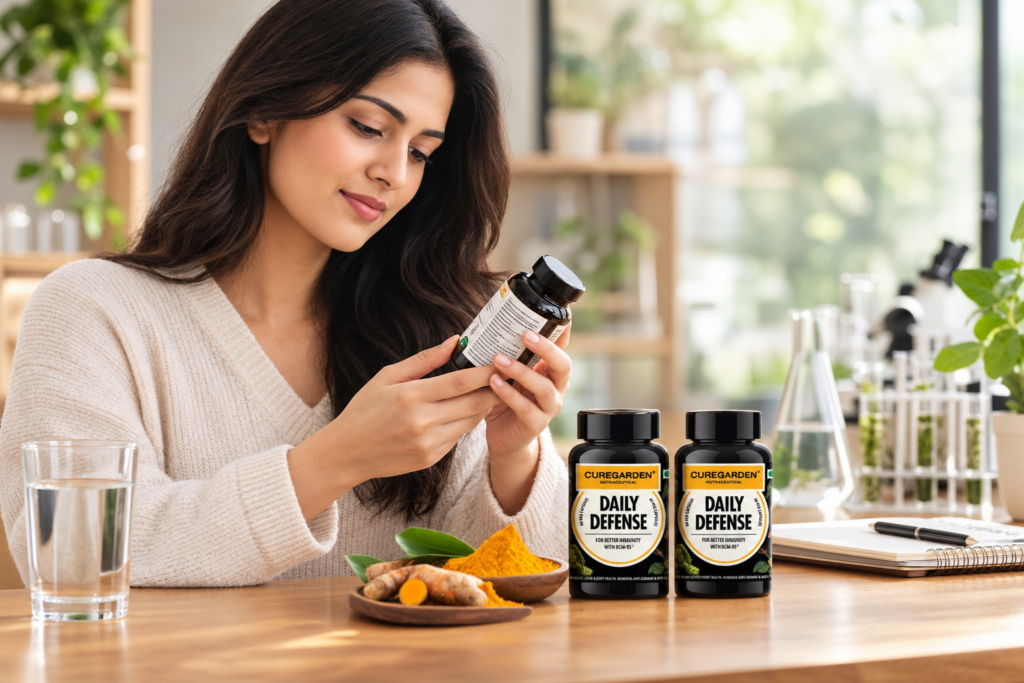
Finding the Right Choice at Curegarden
Finding the Right Choice at Curegarden
Your health goals require safe and proven daily support. Curegarden merges nature with strict scientific methods. Arjuna Natural brings decades of global research. Every product delivers real, measurable results. We never guess when it comes to your well-being. We test every batch to ensure it is clean. Our highly absorbed extracts work faster and better.
You deserve supplements that actually change how you feel daily. Start reading labels carefully and asking the right questions. The ones that genuinely care about herbal supplement quality will hand them over without hesitation, every time. Choose products backed by science, strict testing, and clean sourcing. When you know what to look for, the choice becomes easy.