


If you’ve been researching natural options for blood sugar support, you’ve likely come across berberine a plant compound that’s picked up serious attention in both clinical research and online wellness communities. CureGarden’s Berberine Capsule is the brand’s entry into this category, positioned within its Blood Sugar Management line. Here’s what the product actually offers, what the science behind its main ingredient says, and what to know before adding it to your routine.
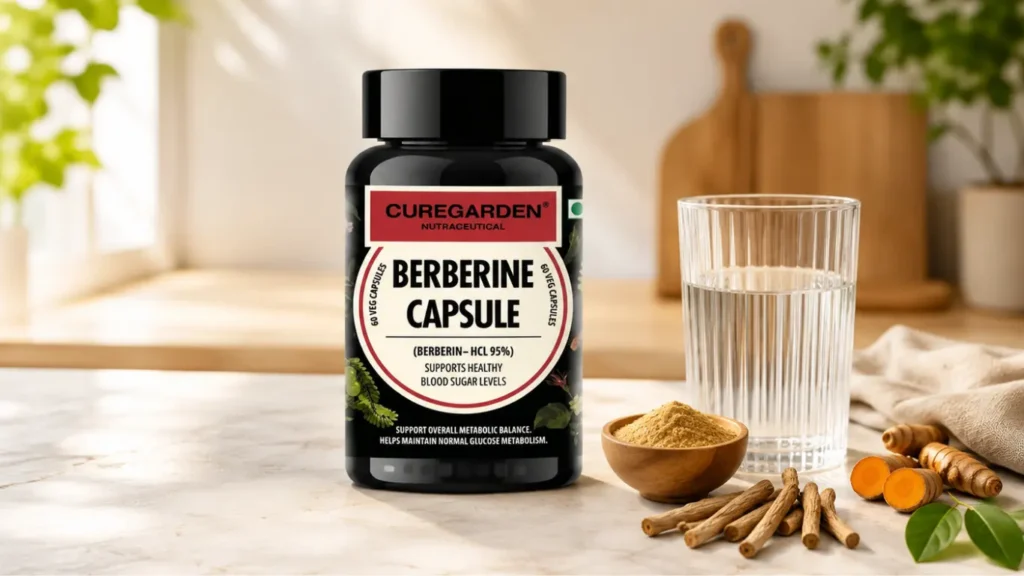
What Is the CureGarden Berberine Capsule?
CureGarden’s Berberine Capsule is formulated with plant-derived berberine extract, packaged as 60 vegetarian capsules per bottle. It’s marketed under the brand’s Blood Sugar Management category and positioned around four main use cases:
- Supporting healthy blood sugar levels alongside diet and exercise
- Supporting metabolism and weight management
- Promoting digestive health
- A clean, additive-free, vegetarian capsule format
CureGarden is the consumer-facing supplement brand of Livlong Nutraceuticals, which in turn is a subsidiary of Arjuna Natural — a Kerala-based botanical extract manufacturer with several decades of formulation experience. The product carries GMP, ISO, FSSAI, and Halal certification markers shown across CureGarden’s site.
What Is Berberine, and Why Is It in a Blood Sugar Supplement?
Berberine is a naturally occurring alkaloid found in plants like barberry, goldenseal, and Berberis aristata (tree turmeric), with a long history of use in traditional Chinese and Ayurvedic medicine — historically for digestive complaints rather than metabolic health.
Its more recent reputation comes from modern clinical research. Berberine appears to activate AMPK, an enzyme that helps regulate how cells use energy — when active, muscle cells take up more glucose and the liver produces less of it. This is a mechanism it shares in part with the diabetes medication metformin, which has led to comparisons between the two, though the two compounds aren’t identical in how they work throughout the body.
What the Research Shows
Multiple systematic reviews and meta-analyses of randomized controlled trials have examined berberine’s effects on blood sugar markers. Findings vary somewhat between studies, but the general pattern holds up:
- Fasting blood glucose: reductions in the range of roughly 0.5–0.86 mmol/L (about 9–15 mg/dL) compared to control groups
- HbA1c (a longer-term blood sugar marker): reductions of roughly 0.5–0.73 percentage points across pooled data
- Post-meal glucose: reductions in the range of roughly 1.16–1.81 mmol/L
- Cholesterol markers: modest improvements in LDL and triglycerides reported in several reviews
These are population-level averages from clinical trials, not guarantees for any individual — and most studies looked at berberine as an addition to diet, exercise, or existing treatment, not as a standalone replacement for either.
How to Take It (General Guidance)
CureGarden’s product listing doesn’t specify a per-capsule milligram dose, so check the label on your bottle for exact dosing. As a general reference point, clinical trials on berberine have most often used 900–1,500 mg per day, split into two or three doses — commonly around 500 mg before meals — because berberine has a short half-life and needs to be re-dosed through the day to maintain steady levels.
Safety Considerations
Berberine is generally well tolerated, but a few things are worth knowing before starting:
- Digestive side effects — nausea, diarrhea, or cramping — are the most common, especially at higher doses or when starting too quickly. Taking it with food and starting low tends to help.
- Drug interactions matter. Berberine inhibits liver enzymes (CYP2D6, CYP2C9, CYP3A4) that metabolize a wide range of prescription medications, including immunosuppressants like cyclosporine and blood pressure medications like losartan. It can also intensify the effect of diabetes medications, raising hypoglycemia risk if doses aren’t adjusted.
- Not recommended during pregnancy or breastfeeding, or for young children.
- Regulatory note: berberine is sold as a dietary supplement, not an approved drug, in India and most markets — it hasn’t been through the same regulatory review as prescription medications.
Anyone on prescription medication, particularly for diabetes, blood pressure, or immune suppression, should talk to a doctor before adding berberine to their routine.
Should You Try It?
Berberine has a more substantial clinical evidence base than most trending “natural” supplements — that part is genuinely earned. Whether the CureGarden formulation fits your needs comes down to a few practical questions: your current medications, whether you’re already tracking blood sugar, and whether you’re prepared to combine it with the diet and activity changes that the research consistently shows amplify its effects.
Frequently Asked Questions
Is CureGarden’s Berberine Capsule currently available?
Availability changes over time — check the current listing on curegarden.in for stock status before ordering.
How many capsules are in a bottle?
The product comes in a 60-capsule bottle, formulated as vegetarian capsules.
Can I take this alongside my diabetes medication?
Only under medical guidance. Berberine can amplify the blood-sugar-lowering effect of diabetes medications, which raises the risk of hypoglycemia if not properly monitored.
Is berberine a substitute for metformin or other prescribed medication?
No. Despite some mechanistic overlap, berberine hasn’t been evaluated with the same regulatory rigor as prescription diabetes medications and shouldn’t replace a doctor-prescribed treatment plan without medical supervision.
Conclusion
CureGarden’s Berberine Capsule brings a well-researched compound into a straightforward vegetarian capsule format, aimed at people looking to support blood sugar and metabolic health alongside — not instead of — the fundamentals: diet, exercise, and regular monitoring. As with any supplement targeting blood sugar, the most useful next step before starting is a conversation with your doctor, particularly if you’re on other medications.
Sources / References
- CureGarden — Berberine Capsule product page
- NCCIH — In the News: Berberine
- Cleveland Clinic — Berberine: What It Is, Benefits & Side Effects
- The Journal of Nutrition — Overall and Sex-Specific Effect of Berberine on Glycemic and Insulin-Related Traits
- PubMed — Glucose-lowering effect of berberine on type 2 diabetes: systematic review and meta-analysis
This article is for informational purposes . Talk to your doctor before starting berberine or any new supplement, especially if you’re pregnant, breastfeeding, or taking other medications.